What Is Tailor Shop Management Software
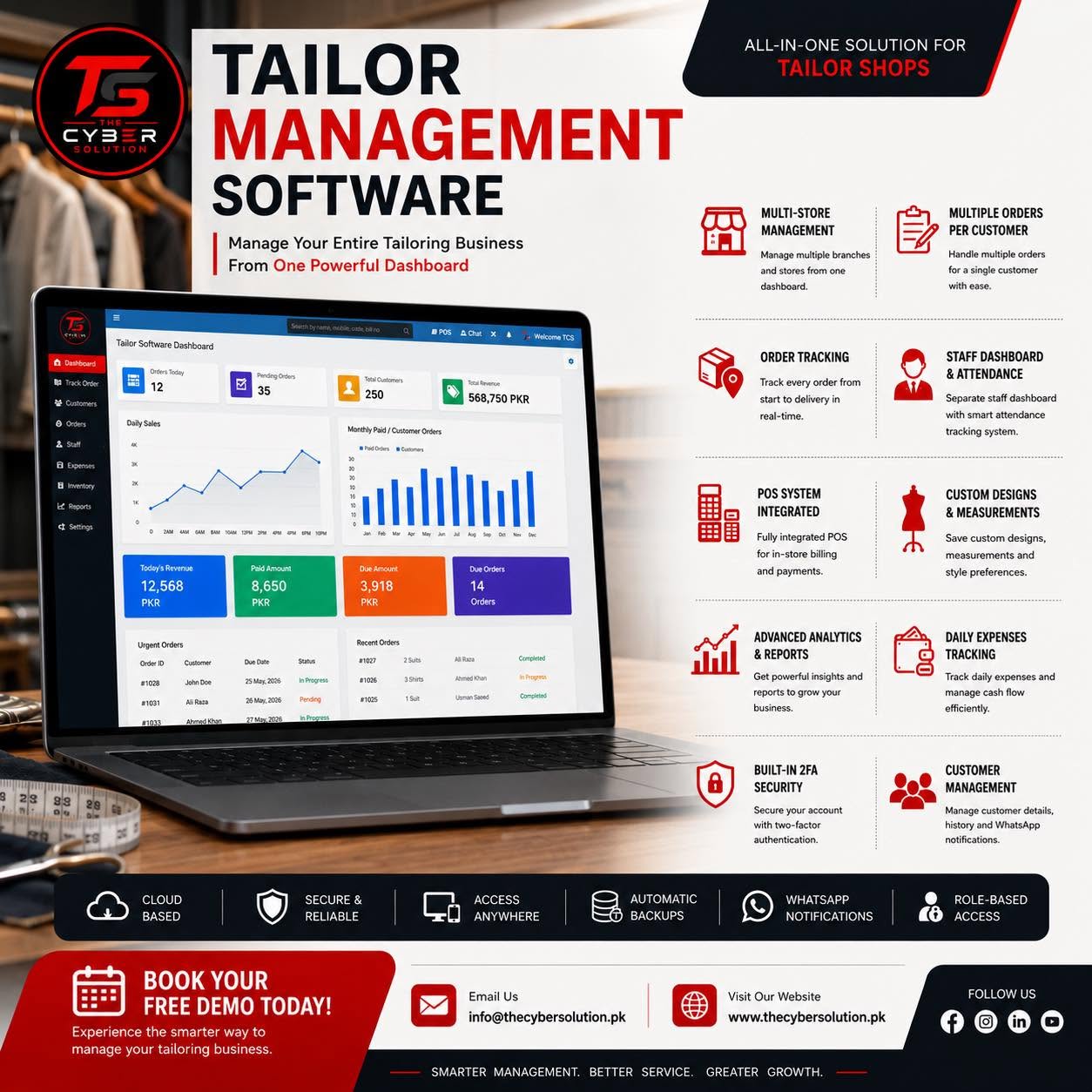
Unlike generic small business POS or accounting software, dedicated tailoring platforms understand the unique workflow of bespoke and alteration businesses. This includes multi-stage garment pipelines, fabric notes, fitting schedules, and detailed customer measurement profiles.
Why Tailors Need Dedicated Software in 2026
The tailoring industry is highly competitive. Customers expect fast turnarounds, real-time updates, and a highly personalized experience. Manual systems simply cannot keep up with modern retail expectations. Here is what dedicated garment software solves:
- Lost or delayed orders due to poor tracking.
- Inconsistent measurements leading to costly remakes and fabric waste.
- Missed follow-ups and poor customer communication.
- No visibility into revenue, outstanding balances, or staff performance.
- Difficulty scaling operations across multiple store locations.
Key Features of the Best Tailor Management Software
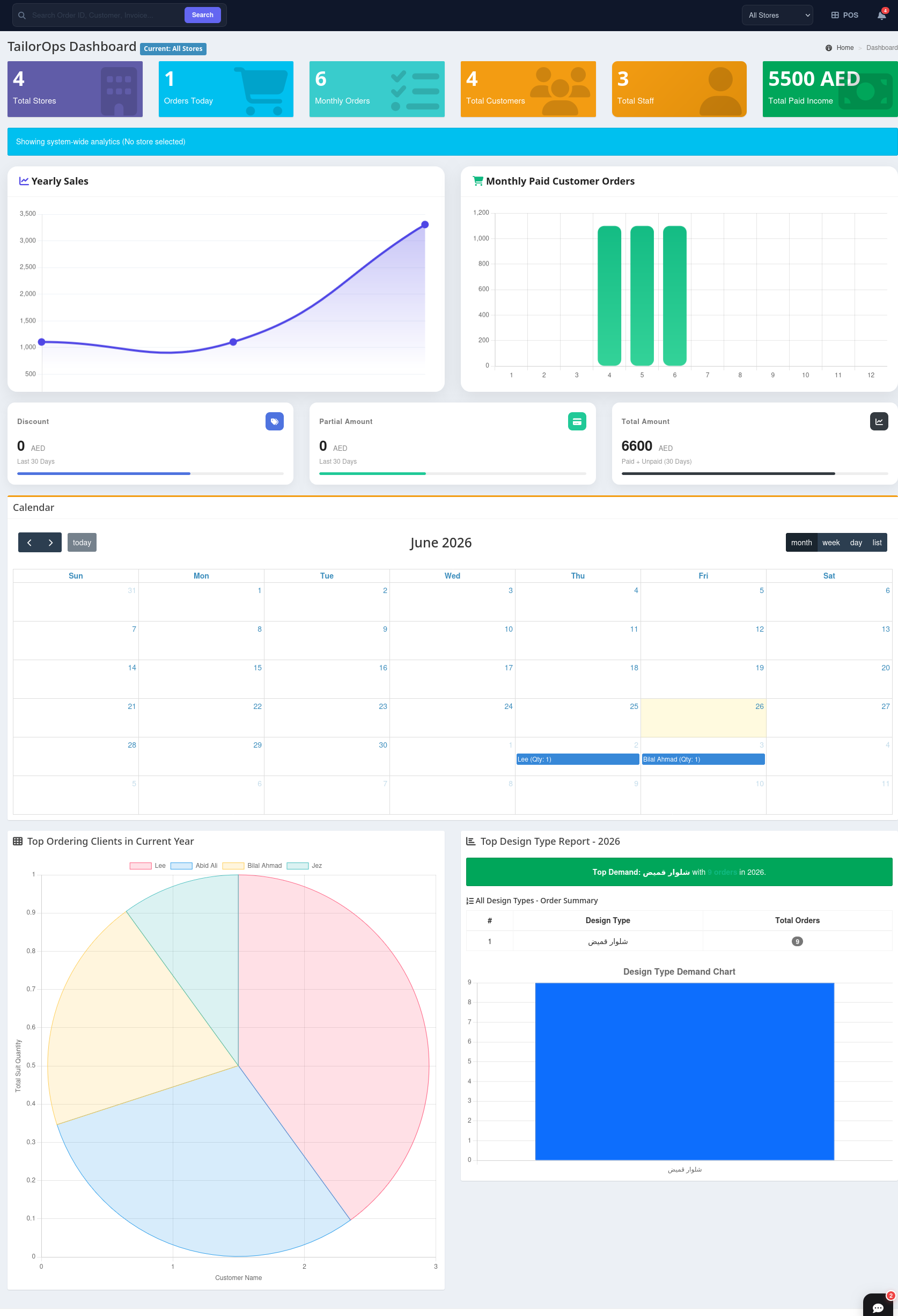
When evaluating tailoring software options, focus on the core capabilities that directly impact how efficiently your shop operates day-to-day.
1. Intuitive, Tailor-First Dashboard
Generic software forces you to adapt to its layout. The best platforms feature a basic, highly intuitive left-side menu structured exactly for a tailor's workflow—keeping Orders, Measurements, Customers, and Invoices front and center without unnecessary clutter.
2. Bespoke Order Pipeline & Visual Calendars
Bespoke tailoring involves multiple stages: measuring, fabric selection, cutting, stitching, fitting, and finishing. A visual pipeline keeps your team aligned. Look for features like dynamic calendar integrations that make scheduling customer fittings effortless and visually clear.
3. Customer CRM with Lightning-Fast Measurement Profiles
A built-in CRM stores each customer’s measurement history, order records, fabric preferences, and communication logs. Rapidly searchable data grids allow you to pull up returning customer profiles instantly, which is critical for bespoke tailoring where personalization drives repeat business.
4. Advanced Invoicing & Tax Compliance
Tailor invoicing software enables you to create professional invoices with a single click while tracking partial deposits and outstanding balances. If you are operating in regions with specific tax structures, ensure the software supports localized financial tracking.
5. Bank-Grade Security & Access Controls
Customer measurements and business financials are sensitive data. Leading platforms in 2026 are moving beyond basic passwords by integrating App-Based Two-Factor Authentication (2FA) to ensure that only authorized staff can access your system, protecting your business from unauthorized logins.
6. Automated Customer Notifications
Manual follow-ups are time-consuming. Advanced tailoring software automates SMS or WhatsApp notifications whenever an order status changes (e.g., "Ready for Fitting" or "Ready for Pickup"), saving time and keeping customers informed effortlessly.
How to Choose the Right Tailoring Software for Your Business
With several options available in the market, choosing the right platform comes down to your shop’s specific workflow. Use this framework:
- Define your workflow first: Map out your order types (bespoke, alterations) and list every step from intake to delivery. The software must reflect your actual process.
- Prioritize must-have features: For bespoke tailors, accurate measurement storage, visual scheduling, and fast data retrieval are non-negotiable.
- Check scalability: If you plan to open more locations, invest in software that supports multi-store management.
- Evaluate ease of use: Staff adoption is the biggest barrier. Opt for software with a clean, tailored menu structure that doesn’t require extensive training.
- Look at security: Ensure the platform offers robust user roles and modern authentication methods like 2FA.
Best Tailor Management Software for UAE, Pakistan, and Global Boutiques
While many legacy systems cater to Western markets, modern tailoring hubs need agile software that adapts to their regional business models. For businesses operating in high-demand markets like the UAE and Pakistan, the best options offer:
- Simple setup with no technical expertise required.
- Localized tax and currency support for accurate invoicing.
- High-level security protocols, including authenticator app integrations, to protect VIP client data.
- Mobile-friendly interfaces for staff operating on the shop floor.
The Real ROI of Tailor Shop Management Software
Beyond convenience, the right software delivers measurable business value. Tailor shops that move from manual to digital systems typically see compounding returns on their investment:
| Benefit | How It Helps Your Business |
|---|---|
| Fewer Missed Orders | Clear status tracking ensures no garment is lost or delayed. |
| Fewer Measurement Errors | Precision data storage reduces costly remakes and fabric waste. |
| Better Cash Flow | Real-time payment ledgers show exactly what is paid and outstanding. |
| Higher Retention | Personalised, consistent service keeps VIP customers coming back. |
| Faster Staff Onboarding | A basic, intuitive menu structure gets new team members productive quickly. |
A tailor who spends just two fewer hours per week on administrative tasks frees up over 100 hours per year—time that can go directly toward serving more customers and scaling the business.
Conclusion
In 2026, tailor shop management software is a competitive necessity. Whether you manage a single bespoke boutique or a multi-branch garment business, the right platform transforms how you operate and how your customers experience your brand.
Focus on software built specifically for the tailoring industry—systems that prioritize a clean tailor-first menu, robust security, and seamless customer tracking.
If you’re ready to see what modern, secure, and incredibly fast tailoring software looks like in practice, explore TailorOps. Designed to streamline everything from complex measurements to final delivery, it is the ultimate operating system for your tailoring business.
Try it today at tailorops.thecybersolution.pk
FAQs
What features should I look for in bespoke tailoring software?
Essential features include a bespoke order pipeline, customer measurement storage, automated notifications, invoicing with deposit tracking, fast data retrieval grids, and robust security like Two-Factor Authentication (2FA).
Does tailoring software work for both bespoke and alteration shops?
Absolutely. The best platforms handle the full spectrum of garment work. They provide structured workflows for capturing complex bespoke measurements from scratch, as well as tracking simple hem and repair alterations.
How does software help with customer fittings?
Modern platforms integrate visual calendars and scheduling tools directly into the dashboard. This allows your team to book fitting appointments seamlessly and automatically remind customers, reducing no-shows.
Can I manage multiple branches with one software?
Yes. Cloud-based tailoring software allows you to oversee multiple store locations from a single master dashboard. Staff access is restricted to their specific branch, while owners maintain full visibility over the entire operation's revenue and order status.